

Microsoft’s Windows piracy crackdown just got a serious hardware upgrade. By tying Windows activation to the TPM 2.0 chip now mandatory in every Windows 11 PC, Microsoft has closed loopholes that kept pirated installations running for years — and the enforcement is happening at a level software patches alone could never reach. If you’ve been running an unactivated or workaround-activated copy of Windows, here’s the plain-English breakdown of what changed, what it means for you, and what the sensible next step looks like.
What Is TPM 2.0 and Why Does It Matter for Activation?
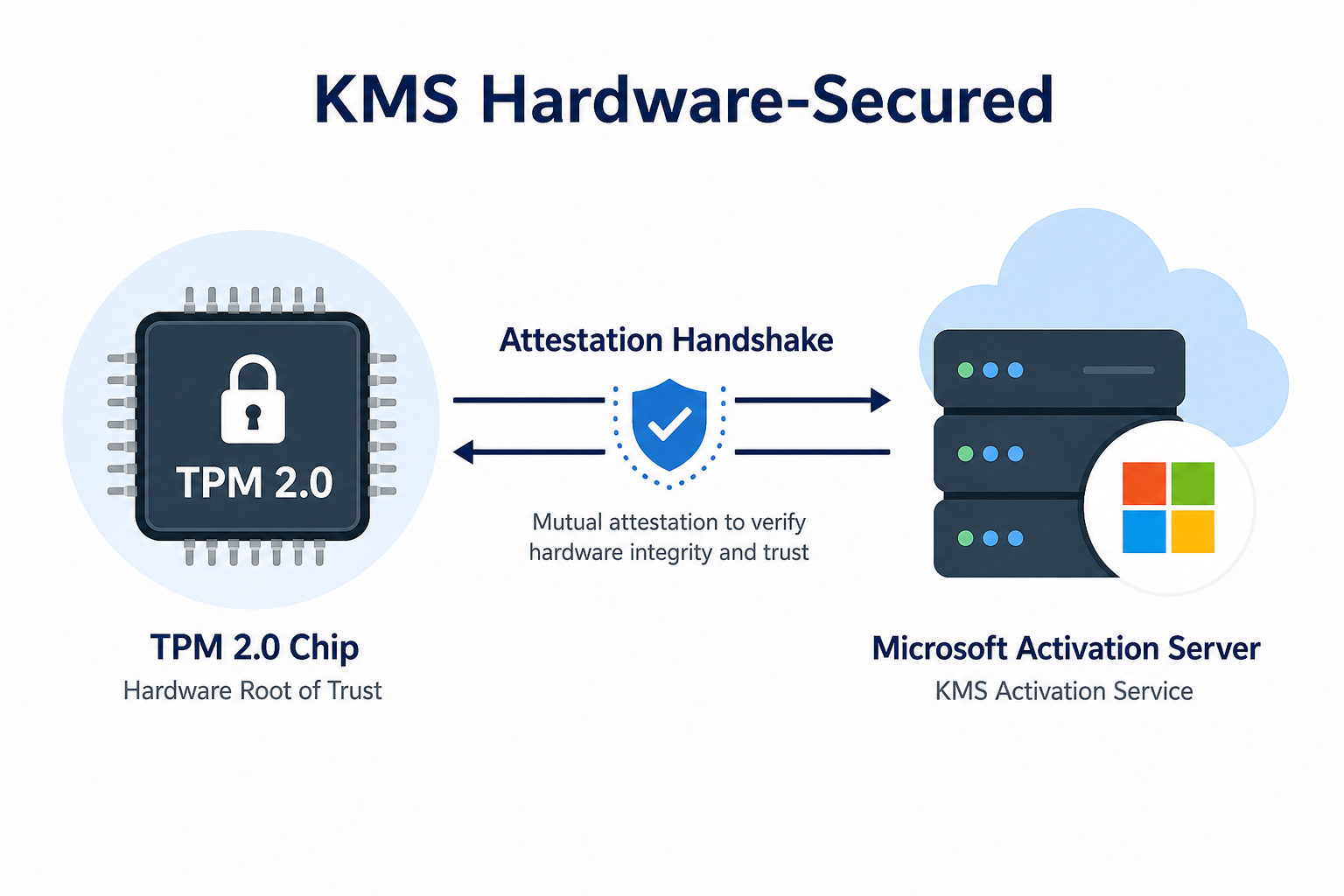
The Trusted Platform Module (TPM) is a dedicated security chip baked into modern motherboards. It stores cryptographic keys, verifies boot integrity, and — critically — can prove to remote services that a piece of hardware is exactly what it claims to be. Microsoft has required TPM 2.0 for Windows 11 since launch in October 2021, but only recently began using it as an active enforcement mechanism rather than just a compatibility gate.
- Hardware attestation: The TPM signs a challenge from Microsoft’s servers, confirming the host machine is real, unmodified hardware.
- Key storage: Activation credentials bound to a TPM cannot simply be copied to a different machine or spoofed by software alone.
- Remote verification: Microsoft can request attestation at any point, not only during initial setup.
The net result is that activation is no longer purely a software transaction. The chip becomes a physical gatekeeper, and that changes the piracy landscape fundamentally.
The KMS38 Loophole — and How Microsoft Closed It
For years, the most popular Windows activation loophole used by home users and small businesses alike was a method called KMS38. KMS (Key Management Service) is Microsoft’s legitimate volume-licensing tool used by enterprises. KMS38 exploited the way Windows handled KMS lease periods, tricking the system into thinking it was activated by a real corporate server until the year 2038 — hence the name.
In 2025, Microsoft patched KMS38 directly, making that particular trick no longer functional on up-to-date Windows installations. But the bigger structural move came with the introduction of KMS Hardware-Secured, officially detailed by Microsoft in a Windows IT Pro Blog post. Under this new model, a KMS host server must prove via TPM attestation that it is running on genuine, certified hardware before it is permitted to issue activation tokens to client machines.
As Microsoft’s official KMS Hardware-Secured announcement on the Windows IT Pro Blog explains, this TPM-based trust layer is designed to prevent unauthorised or virtualised KMS hosts from being used to activate Windows at scale — the exact method that has powered many of the most-used piracy tools for over a decade.
Who Does This TPM Activation Block Actually Affect?
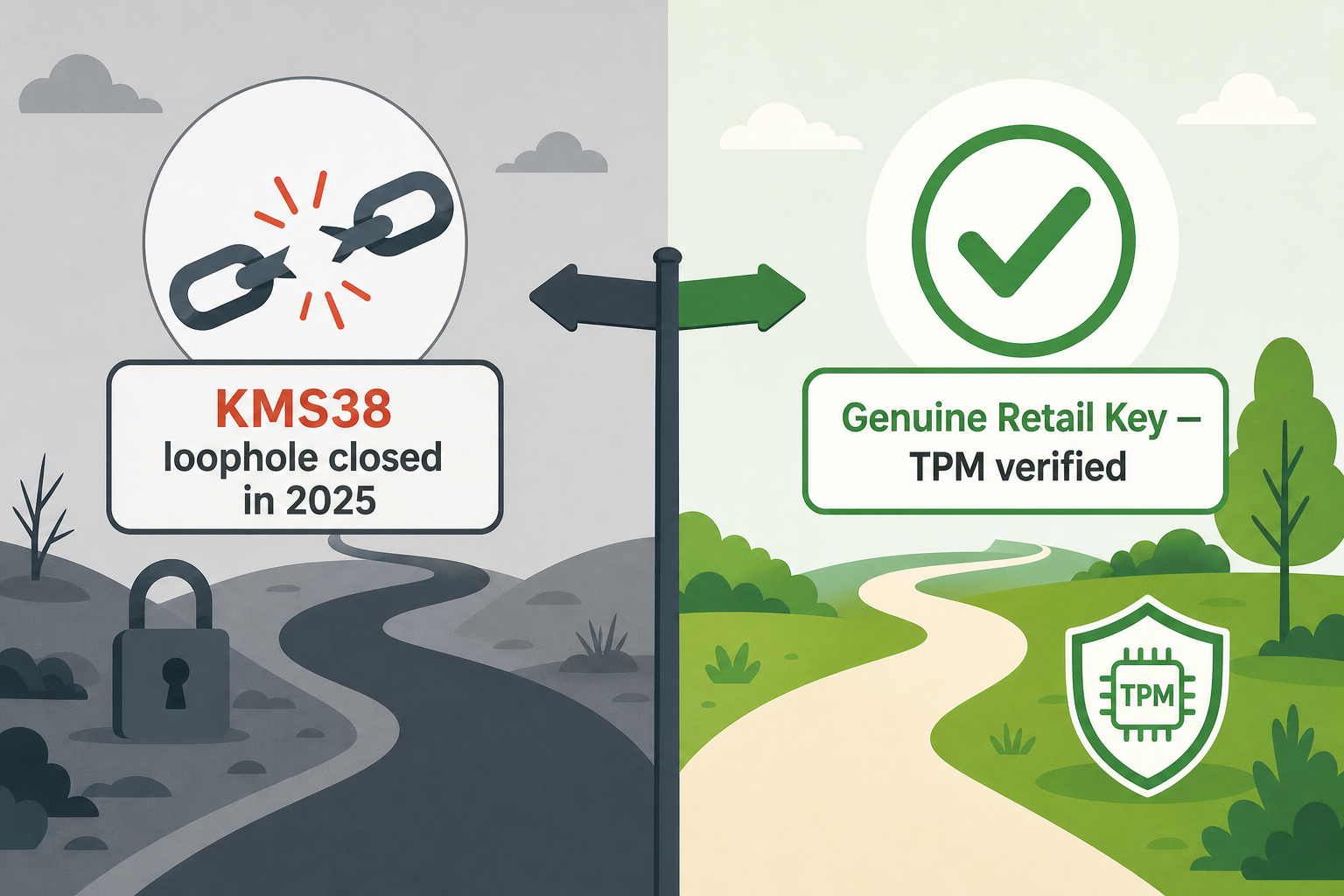
This is where nuance matters. Early headlines suggested the TPM activation block would instantly kill every pirated Windows 11 installation overnight. That is not accurate — and understanding the real scope helps you make an informed decision.
Enterprise and Volume-License Users
KMS Hardware-Secured primarily targets the server side of volume activation. Organisations that used virtualised or software-emulated KMS hosts to activate large fleets of Windows machines — legitimately or not — will find that those hosts no longer pass Microsoft’s TPM attestation check. Legitimate IT departments running genuine hardware are unaffected; those running unofficial emulated servers are not.
Home Users Running Pirated Windows
For home users, the picture is more nuanced. The KMS38 patch closed one popular route in 2025. HWID (Hardware ID) activation methods, which bind a digital licence directly to the machine’s hardware fingerprint, remain a separate area — but Microsoft’s expanding TPM attestation framework means future enforcement can reach further with each update. The trajectory is clear: the window of opportunity for pirated Windows is narrowing patch by patch, and hardware-level checks make reversal far harder than software workarounds.
Anyone on Older Activation Workarounds
If you are running a copy of Windows 11 activated via a script, a third-party “activator” tool, or a recycled KMS key from a dubious source, your installation is at growing risk of losing activation status — not necessarily today, but with every Windows Update that tightens the enforcement chain.
Why a Hardware-Level Windows Piracy Crackdown Is Different
Previous anti-piracy measures — watermarks, feature restrictions, nagging notifications — were annoying but ultimately cosmetic. A determined user could ignore them. The shift to TPM-based enforcement is structurally different for three reasons.
- It cannot be patched away by the user. You cannot update firmware to lie to a TPM attestation check in the way you could modify a registry key or swap a DLL.
- It escalates with Windows Update. Every cumulative update can tighten attestation requirements without requiring Microsoft to announce a new anti-piracy initiative. The enforcement is continuous, not episodic.
- It exposes users to real security risk. Systems running pirated Windows often skip updates to avoid triggering activation checks. In 2025, that means missing critical security patches — a serious vulnerability when ransomware and zero-day exploits are at an all-time high. According to Microsoft’s own security data, unpatched Windows systems account for the vast majority of successful enterprise intrusions.
The TSforge Counter-Response and the Ongoing Cat-and-Mouse
It would be dishonest to pretend the Windows piracy crackdown has been a complete knockout. Security researchers and the piracy community have already responded with methods like TSforge, which attempts to manipulate the Software Protection Platform (SPP) at a lower level than previous tools. As reported by TweakTown, “TPM attestation verifies KMS host hardware identity before allowing activation, though pirates have already responded with a new TSforge method.”
This is the familiar cat-and-mouse dynamic. But the speed and depth of Microsoft’s response signals a genuine change in strategy: rather than plugging individual software holes, the company is building enforcement into silicon. Each new hardware generation makes the attacker’s task measurably harder, while legitimate users are entirely unaffected.
The Real Cost of Running a Pirated Windows Installation
Setting aside the legal dimension, the practical cost of pirated Windows in 2025 and beyond is significant:
- Security gaps: Activator tools frequently contain malware. Research by cybersecurity firms has found that a majority of “Windows activator” downloads bundle trojans or spyware.
- No support: Microsoft support, Windows Backup, and cloud-connected features require a valid licence.
- Feature lockouts: BitLocker encryption, Windows Hello, and several enterprise-grade security features either require TPM attestation or are disabled entirely on unverified installations.
- Sudden deactivation risk: As the TPM activation block tightens, the risk of waking up to a watermarked desktop — or worse, a locked-down PC — increases with each update cycle.
- No legitimate upgrade path: A pirated installation has no clean route to Windows 12 or future versions without purchasing a genuine licence at full price.
How to Get a Genuine Windows Licence Without Paying Full Price
This is the part most piracy-adjacent guides quietly skip. Legitimate Windows licences do not have to cost the price Microsoft charges on its own store. At TopKeyShop, you can get a genuine, retail-grade Windows licence at a fraction of that cost — the same Microsoft activation, the same feature set, the same update eligibility, zero risk of deactivation from a Windows activation loophole being patched.
For example, a Windows 11 Pro Retail 64-bit key is available for just €9.10 — that’s a genuine retail activation key with official download links, fast email delivery, and a 100% money-back guarantee. If you want the full productivity suite in one go, the Windows 11 Pro Retail + Office 2024 Professional Plus Bundle is currently on sale at €19.10 (regular €29.00) — covering your OS and office suite in a single purchase.
These are retail keys: they bind to your Microsoft account, survive hardware changes through Microsoft’s licence transfer process, and pass every TPM attestation check Microsoft now requires — because they are exactly what Microsoft’s servers expect to see.
What You Should Do Right Now
Whether you are an IT administrator managing a fleet or a home user who has been running a workaround, the action steps are the same:
- Check your activation status: Go to Settings → System → Activation. If it says anything other than “Active” with a product key or digital licence, you are vulnerable.
- Stop delaying Windows Updates: The security risk of staying unpatched now outweighs the risk of triggering an activation check for most users.
- Buy a genuine licence before enforcement tightens further: The closer Microsoft’s Windows piracy crackdown gets to HWID and home user enforcement, the more disruptive the transition becomes. Acting now is significantly cheaper and less stressful than recovering from a locked system.
- Avoid activator tools entirely: Run a full antivirus scan if you have used one in the past — many carry persistent malware payloads that outlast the activator itself.
Frequently Asked Questions
Does the TPM activation block affect all Windows 11 users or only enterprises?
The KMS Hardware-Secured change primarily targets KMS host servers used in enterprise and volume-licensing environments. However, the KMS38 consumer loophole was also patched in 2025, and Microsoft’s TPM attestation framework is designed to expand. Home users running pirated installations face increasing enforcement risk with each update cycle.
Will my current pirated Windows installation stop working immediately?
Not necessarily overnight, but the risk is growing. The KMS38 method no longer works on current Windows builds. Other methods are being targeted progressively. Each major Windows Update can strengthen enforcement without advance notice, meaning deactivation can happen without warning after any update.
Is a Windows activation loophole still possible after TPM enforcement?
Tools like TSforge have emerged as a counter-response, but these rely on lower-level exploits that Microsoft is actively working to close. The hardware-level nature of TPM enforcement makes these workarounds increasingly fragile. New methods will likely appear, but so will patches — and the gap between exploit and patch is shrinking.
How does a genuine retail key differ from a pirated activation?
A genuine retail key is registered in Microsoft’s activation servers and tied to your Microsoft account. It survives reinstalls, passes all TPM attestation checks, qualifies for full support and feature access, and provides a legitimate upgrade path to future Windows versions. A pirated activation has none of these properties and carries ongoing deactivation risk.
Is a retail key from a third-party store like TopKeyShop legitimate?
Yes. Retail activation keys sold by authorised resellers are the same keys used by Microsoft’s own store — they activate through Microsoft’s servers in exactly the same way. The key binds to your Microsoft account and hardware, passes TPM attestation, and provides full access to updates, support, and features. The difference is price: third-party resellers can offer substantially lower prices than the Microsoft retail store.
