

The Windows K2 project is Microsoft’s most candid admission yet that Windows 11 hasn’t quite delivered on its promises — and a concrete, structured plan to fix that. Formed in late 2025 as an internal initiative, Windows K2 sets out three non-negotiable pillars — Performance, Craft, and Reliability — and mandates that every Windows team work towards them before shipping new features. It is not a new operating system version. It is a cultural and engineering reset designed to make the Windows 11 you already run feel like the OS Microsoft always said it was.
What Exactly Is the Windows K2 Project?
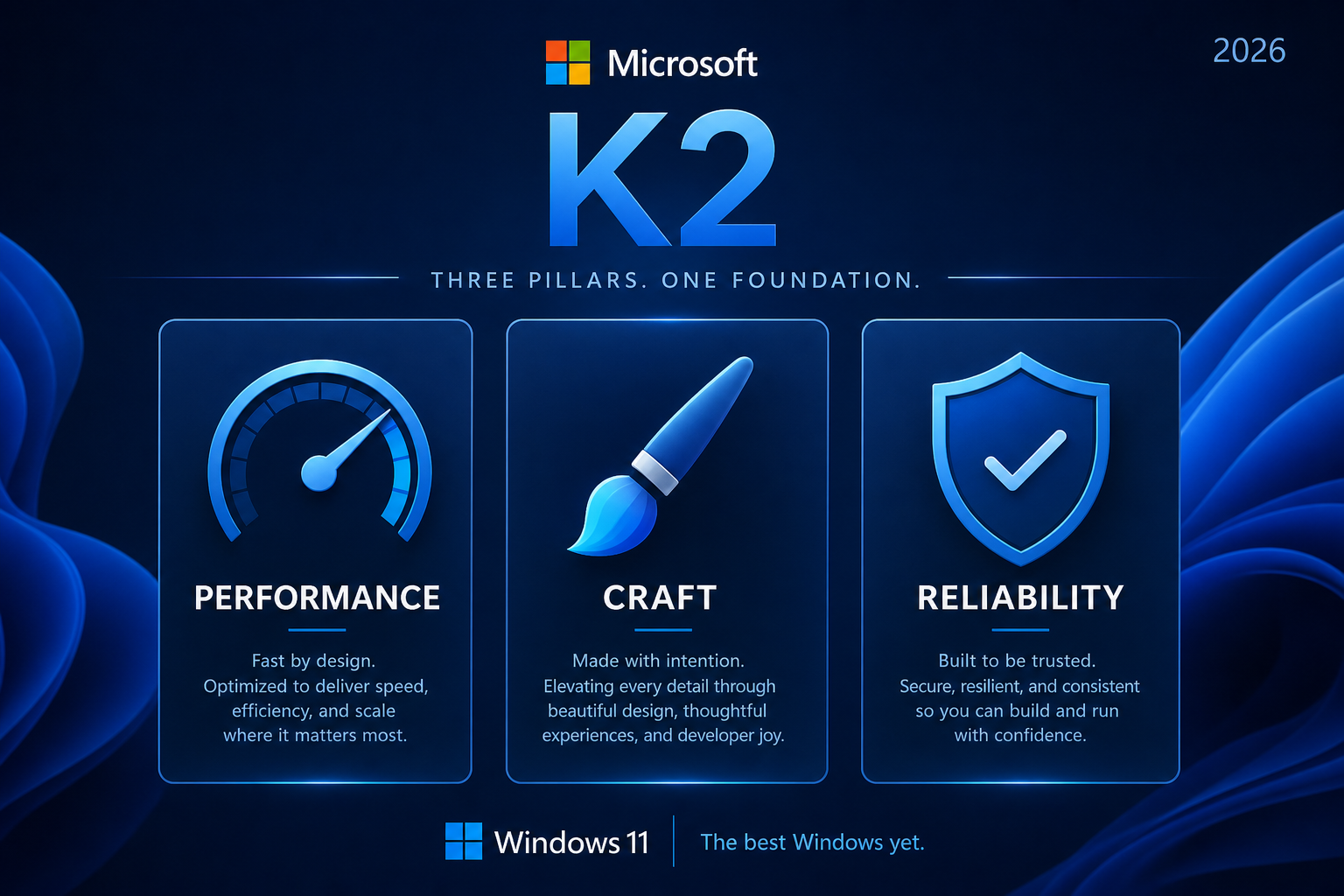
The Windows K2 project is an internal Microsoft initiative reported to have been formalised in late 2025, with its effects rolling out through 2026 and beyond. The name K2 — borrowed from the world’s second-highest mountain, notorious for its difficulty — signals the scale of the challenge Microsoft is taking on. Rather than announcing a flashy Windows 12, the company is doubling down on making Windows 11 genuinely excellent.
According to reporting from Windows Central, the K2 initiative effectively serves as a reboot for the Windows user experience — a directive that quality comes before velocity. Features should not ship until they meet the bar. That is a notable departure from the rapid, sometimes rough update cadence Windows 11 users have endured since 2021.
The Three Pillars of the Microsoft K2 Initiative
Every decision inside the Microsoft K2 initiative is filtered through three core pillars. Understanding them helps you gauge which improvements are likely to land first — and why they matter to everyday users.
1. Performance
Microsoft’s internal goal is for Windows 11 to be measurably faster than Windows 10 on equivalent hardware. That sounds obvious, but it has not been the lived reality for many users who found Windows 11 heavier than its predecessor. The Windows K2 project prioritises boot times, app launch speeds, memory efficiency, and gaming frame rates — the latter partly driven by the widening gap between Windows and SteamOS for PC gaming workloads.
2. Craft
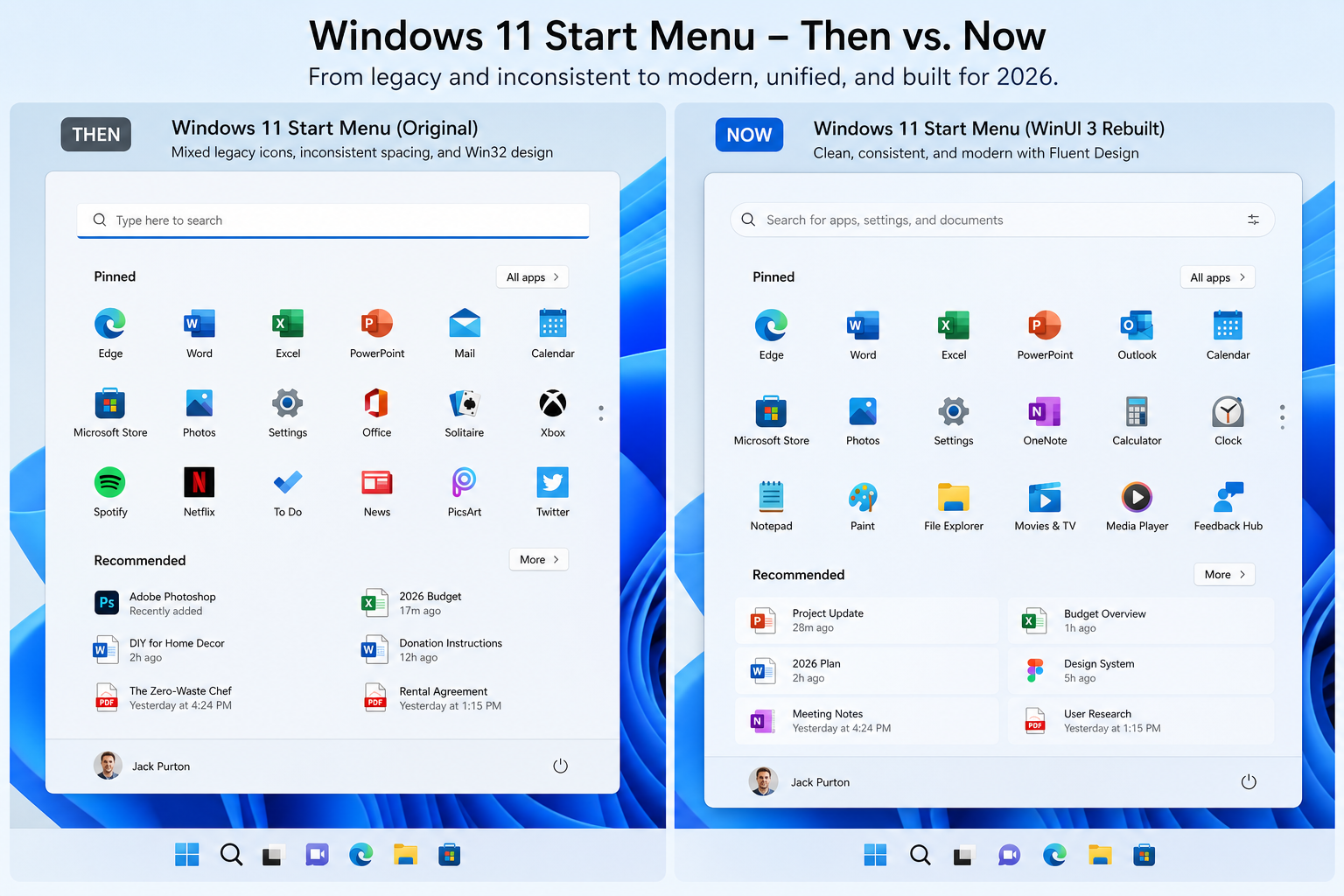
“Craft” refers to the visual and interaction consistency that Windows 11 still lacks. Right-click menus that switch between WinUI 3 and legacy Win32 styles, settings panels that open in Control Panel instead of the modern Settings app, inconsistent iconography — these are all in scope for K2 Windows 11 work. The rebuilt Start menu (migrated to WinUI 3) is one of the first concrete Craft deliverables already shipping to Insider channels.
3. Reliability
The third pillar is perhaps the most important for business users: fewer crashes, fewer regressions, and fewer situations where a Windows Update breaks something that worked fine before. The K2 directive reportedly instructs teams not to rush features out the door — a principle that, if enforced, should translate to more stable monthly cumulative updates across 2026.
What Problems Is K2 Windows 11 Trying to Solve?
To understand why the Windows K2 project exists, it helps to look at the specific frustrations that drove users away from Windows 11 in its early years:
- Copilot overreach: AI features were embedded in places users found intrusive and unhelpful. K2 aims to pull Copilot back to contexts where it genuinely adds value.
- Forced requirements: TPM 2.0 and Secure Boot requirements blocked hundreds of millions of otherwise capable PCs from upgrading, shrinking the Windows 11 install base.
- UI inconsistency: Decades of accumulated interface debt left Windows 11 feeling like three different operating systems stitched together.
- Update regressions: High-profile bugs shipped in cumulative updates — including audio glitches, printing failures, and gaming performance drops — eroded confidence in Microsoft’s QA processes.
- Performance parity: Benchmarks consistently showed Windows 11 trailing Windows 10 on identical hardware in certain workloads, undermining Microsoft’s upgrade narrative.
Microsoft K2 Initiative: Key Changes Already Rolling Out
The Microsoft K2 initiative is not purely theoretical — several changes tied to its goals are already visible in Windows Insider builds as of mid-2026:
Rebuilt Start Menu in WinUI 3
Between 2024 and 2025, Microsoft progressively refined the Start menu layout. Under K2, the next step is a full migration to WinUI 3, delivering a native, consistent rendering pipeline. Early Insider testers report smoother animations and fewer rendering glitches compared to the hybrid approach.
Reduced AI Bloat
One of the most talked-about aspects of the Windows K2 project is the deliberate scaling back of Copilot integrations that cluttered the taskbar and system tray. Microsoft is redirecting AI engineering hours toward making the core OS faster rather than adding more AI entry points.
Scroll and Input Improvements
Scrolling inconsistencies between WinUI 3 and Win32 apps have been a persistent annoyance. K2 engineering work targets unified scroll behaviour across the two UI frameworks — a small fix that anyone who switches between a UWP app and a classic desktop app will immediately notice.
Reliability-Focused Update Gates
Under K2, teams are required to meet reliability thresholds before a feature graduates from Insider to general availability. This is a process change rather than a user-visible feature, but its downstream effect — fewer broken updates — will be felt by every Windows 11 user.
Is Windows K2 a New Version of Windows?
Windows K2 is not Windows 12, and it does not carry a new version number. It is an ongoing internal initiative with no fixed completion date. Think of it less like a product launch and more like a quality mandate — one that will continue to shape every feature, update, and UI change Microsoft ships for Windows 11 through 2026 and into the future. Some of its improvements will arrive as part of annual feature drops (such as 25H2), while others will appear in monthly cumulative updates or Insider preview builds.
What K2 Windows 11 Means for Users Considering an Upgrade
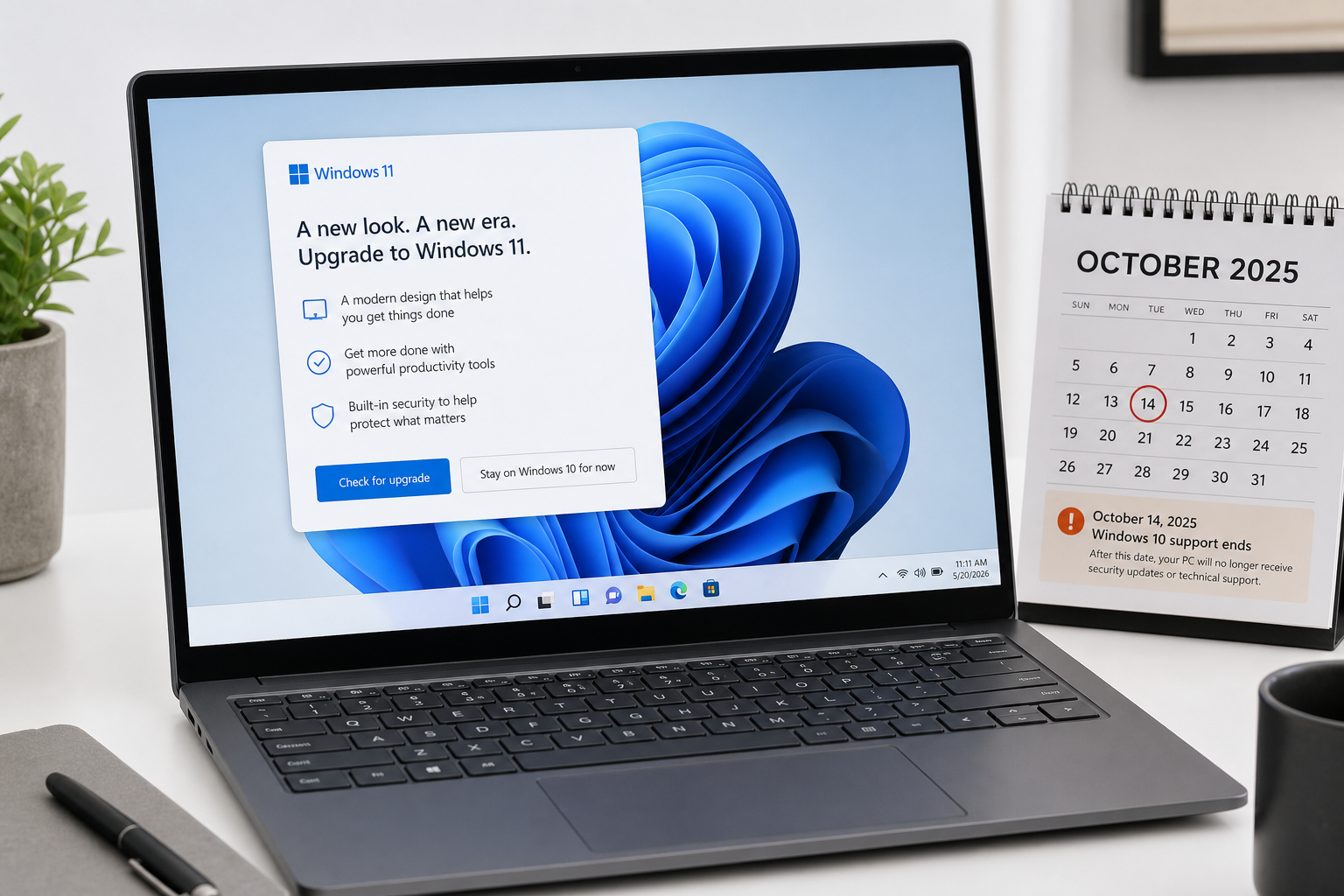
If you have been sitting on Windows 10 waiting for a sign, the K2 Windows 11 initiative is arguably that sign. Windows 10 reached end of mainstream support in October 2025, meaning new features are no longer being developed for it — only security patches under the Extended Security Update programme through October 2027. Windows 11, shaped by K2’s quality mandate, is where Microsoft’s engineering investment is concentrated.
Eligible PCs can still upgrade to Windows 11 at no charge directly from Microsoft. If your machine is not eligible via the free upgrade path, a genuine retail licence key is the most cost-effective way to get up and running. TopKeyShop offers Windows 11 Home Retail from just €14.70, or grab the Windows 11 Pro + Office 2024 bundle from €19.10 — both with official download links and fast email delivery.
Should You Be Excited About the Windows K2 Project?
Cautious optimism is the right posture. Microsoft has made quality pledges before — Windows Vista’s promised reliability, Windows 8’s “fast and fluid” UI — that did not survive contact with shipping deadlines. What makes the Windows K2 project feel different is that it is explicitly framed as a constraint on shipping velocity, not an addition to the feature backlog. When the engineering culture changes — when “done” means reliable, not just functional — the results tend to follow. The early Insider signals are encouraging: a cleaner Start menu, more stable builds, and noticeably fewer UI regressions per update cycle compared to 2023 and 2024.
Whether Microsoft sustains that discipline through competitive pressure and shareholder expectations for AI feature announcements remains to be seen. But for the first time in years, the direction of Windows feels like it is being driven by users rather than marketing teams.
FAQ
What is the Windows K2 project?
Windows K2 is an internal Microsoft initiative formalised in late 2025. It is not a new Windows version — it is a quality mandate that requires all Windows 11 engineering teams to prioritise performance, craft (UI consistency), and reliability before shipping new features. Its effects are rolling out gradually through Insider builds and general updates in 2026.
When will Windows K2 features arrive on my PC?
Some K2-related improvements — such as the WinUI 3 Start menu rebuild and reduced Copilot clutter — are already visible in Windows Insider preview builds as of 2026. Stable rollouts are expected as part of Windows 11’s ongoing cumulative updates and annual feature drops. There is no single K2 launch date; it is an ongoing programme.
Does the Microsoft K2 initiative mean Windows 12 is cancelled?
Microsoft has not officially confirmed or cancelled Windows 12. The K2 initiative signals that the company’s near-term focus is on improving Windows 11 rather than launching a new major version. Whether a Windows 12 eventually arrives remains speculation; for now, Windows 11 is the platform receiving all active development investment.
How does K2 Windows 11 address gaming performance?
One of K2’s performance targets is closing the frame-rate and latency gap between Windows 11 and competing platforms like SteamOS. Microsoft has reportedly acknowledged that gaming benchmarks have favoured SteamOS on the same hardware, and K2 engineering work includes low-level scheduler and memory improvements aimed at delivering better gaming outcomes on Windows.
Should I upgrade from Windows 10 to Windows 11 now?
Windows 10 lost mainstream support in October 2025 and will only receive security patches until October 2027 under Extended Security Updates. With the Microsoft K2 initiative actively improving Windows 11’s stability and performance, now is a sensible time to upgrade — especially while free upgrade eligibility paths remain open for compatible hardware.
