
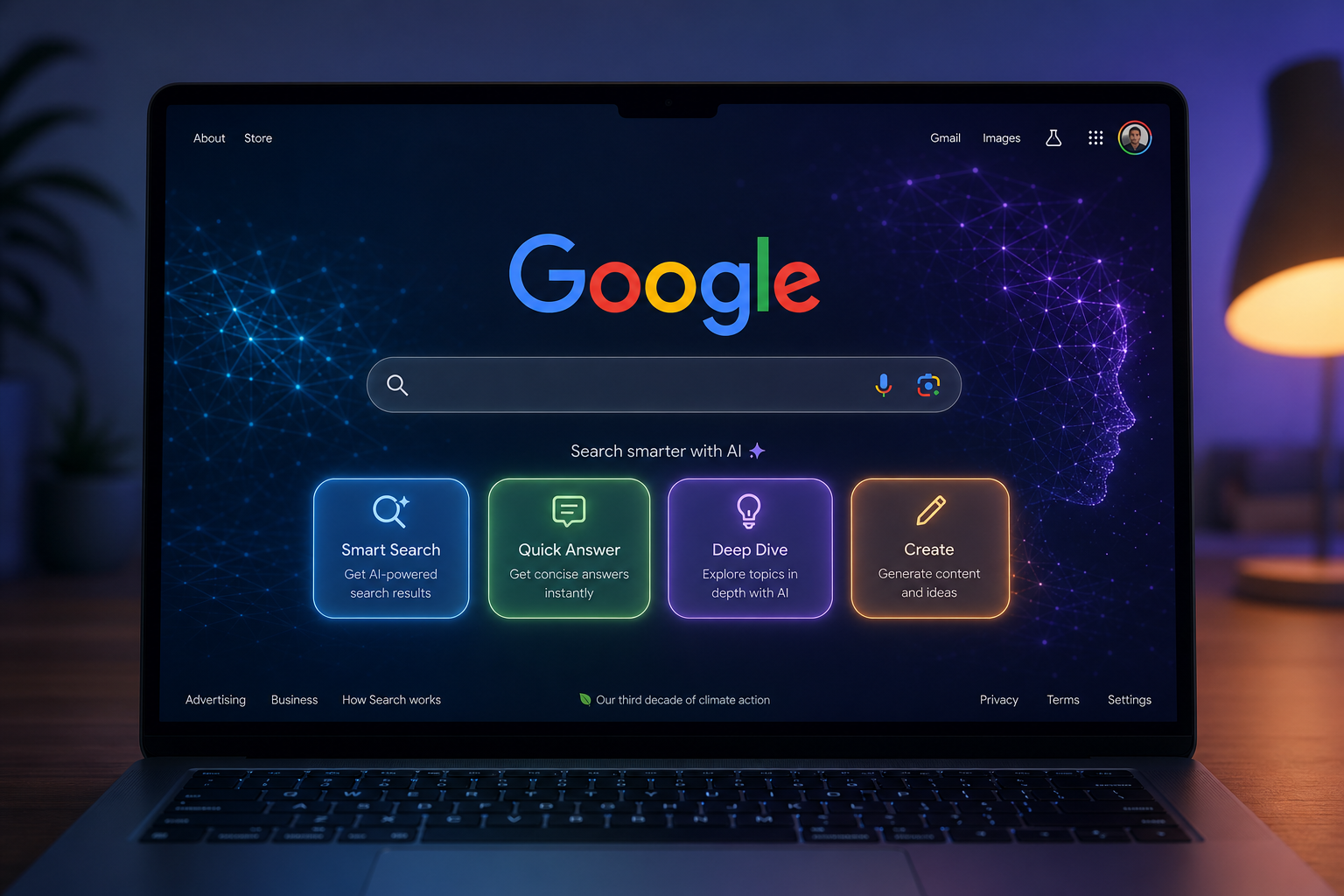
Google’s search button removal AI experiment is one of the most visible signs yet that the era of traditional keyword search is giving way to something fundamentally different. For the first time in 28 years, Google is testing a homepage that swaps out the familiar “Google Search” button in favour of AI-driven controls — and the ripple effects stretch well beyond a simple interface tweak.
The Iconic Button That Defined a Generation of Search
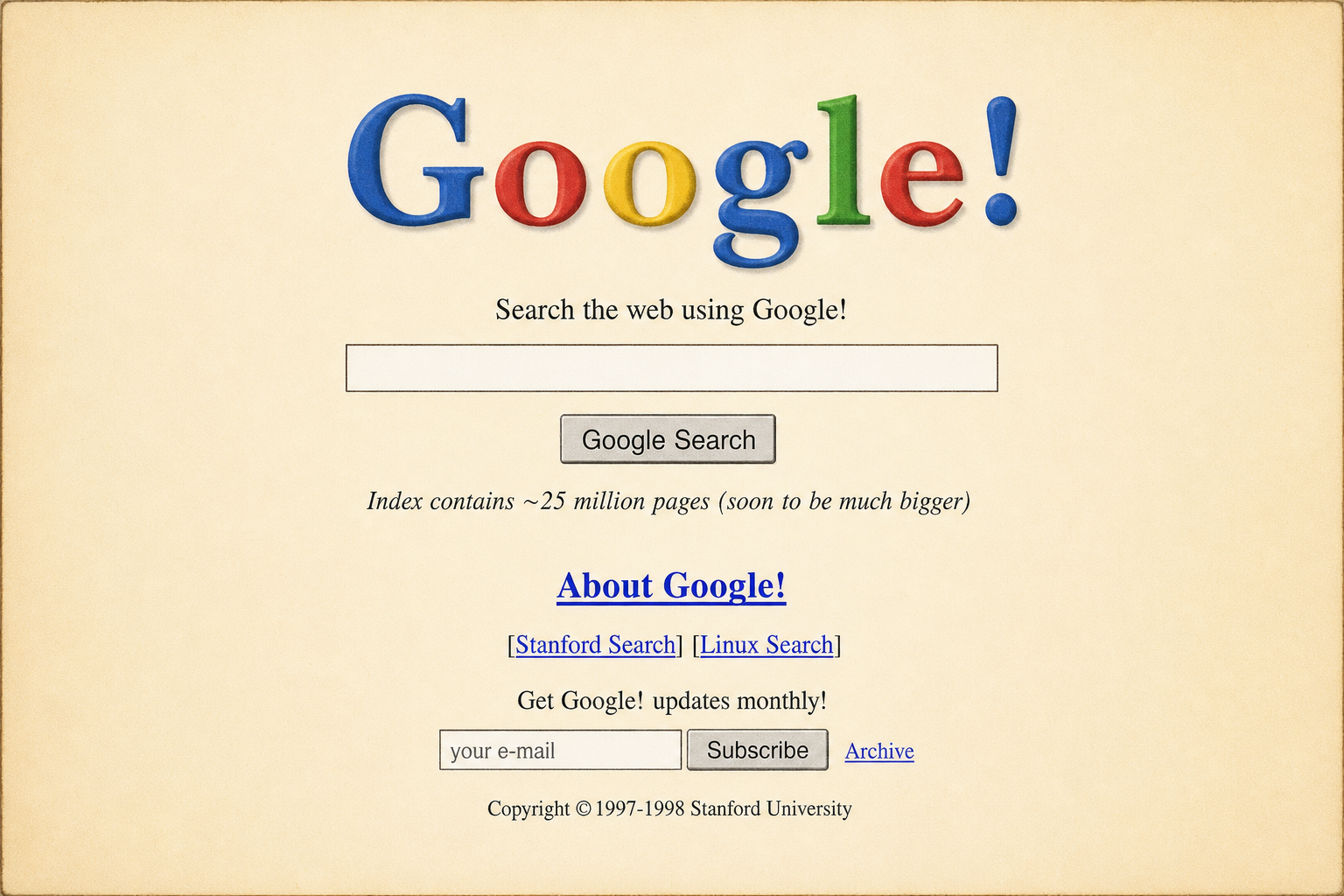
When Google launched in 1998, its homepage was almost aggressively minimal: a logo, a text box, and two buttons — “Google Search” and “I’m Feeling Lucky.” That stripped-back design became one of the most recognisable layouts on the internet. Hundreds of millions of people used it every single day without thinking twice. The “Google Search” button was, in many ways, the on-ramp to the entire web.
For nearly three decades, that button survived every redesign, every product launch, and every competitive threat. It outlasted browsers, social networks, and voice assistants. Now, driven by the rapid rise of generative AI, it is facing its most serious challenge yet — and according to reports from users who have seen the experimental interface, it may already be gone for a portion of Google’s audience.
What the New Google Homepage AI Layout Looks Like
Users who have encountered the experimental design report that the traditional “Google Search” button has been removed from the homepage entirely. In its place, three new AI-oriented buttons have appeared:
-
Create images — allowing users to generate visuals directly from the homepage
-
Ask about files — enabling document-based queries without leaving Google
-
Brainstorm — an open-ended AI prompt mode for idea generation
This is not a cosmetic refresh. It represents a deliberate philosophical shift: Google is no longer positioning itself purely as a place to find links. It is repositioning as a place to do things using AI. According to Futurism’s reporting on the homepage change, the test is small in scope for now, but its implications are enormous.
Google AI Search: The Technology Behind the Shift
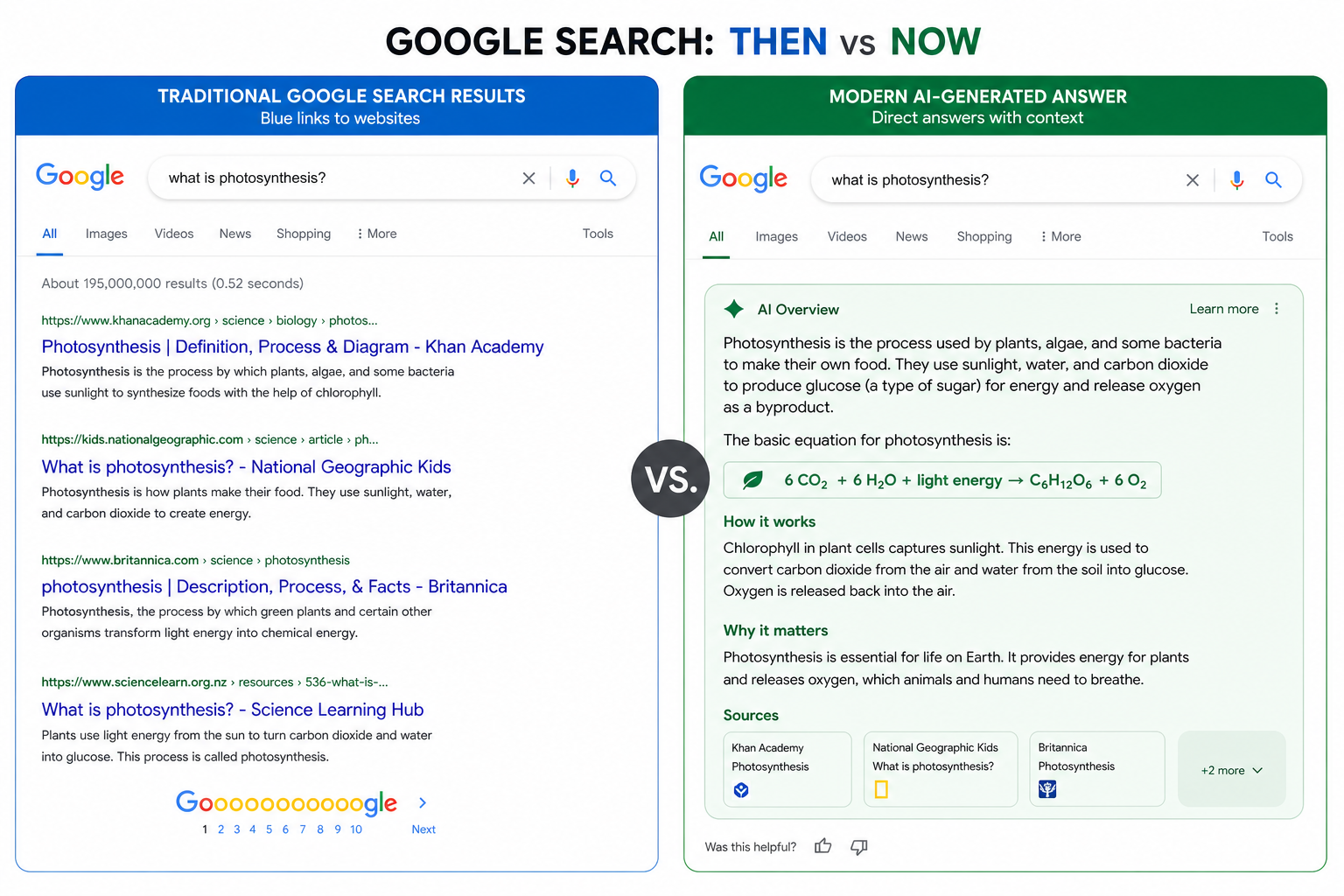
The move towards an AI-first homepage did not happen overnight. Google has spent years integrating machine learning and, more recently, large language models into its search pipeline. The company’s AI Overviews feature — which surfaces AI-generated summaries above traditional search results — was rolled out to hundreds of millions of users in 2024 and has been expanding steadily since.
In parallel, Google has been testing “AI Mode,” a conversational search experience that sits alongside or replaces the classic results page. CNBC reported in May 2025 that Google was already testing an AI Mode button directly on its homepage search bar — a step that presaged the more dramatic removal of the Search button itself. Google’s AI Mode draws on its Gemini model family, which is trained on vast amounts of web content and designed to answer complex, multi-part questions in natural language rather than returning a ranked list of blue links.
The I/O 2026 announcements reinforced this direction, with Google confirming that AI agents would become a core part of the Search experience — capable of browsing, summarising, and even taking actions on a user’s behalf.
Why Google Is Removing the Search Button Now
The timing makes strategic sense. Google faces its most significant competitive pressure in decades. AI-native tools like ChatGPT, Perplexity, and Microsoft’s Copilot have captured the imagination of users who want direct, conversational answers — not a list of pages to trawl through. The Google AI search pivot is, at least partly, a defensive manoeuvre: if users expect AI-first answers, Google needs to deliver them at the earliest possible touchpoint — the homepage itself.
There is also a deeper product logic at play. When a user can type a question and receive a synthesised, contextual answer directly on the Google homepage, the intermediate step of clicking a “Search” button becomes redundant. The query-and-click model assumed that finding information required navigation; AI assumes that information can simply be provided. Removing the button is a signal that navigation may no longer be the primary product.
How the AI Search Button Changes the User Experience
For everyday users, the change may feel disorienting at first. The muscle memory of typing a query and hitting “Google Search” is baked in after decades of repetition. However, the new interface is designed to be intuitive in a different way — the AI prompt box responds to natural language, meaning users do not need to think in keywords. You can ask “What is a good recipe for a weeknight pasta dish with what I’d normally have in a UK kitchen?” and receive a direct answer, not ten links to food blogs.
Critically, Google has confirmed that the test includes a toggle to switch the AI-first experience off, meaning users who prefer the classic layout are not permanently locked out of it. This opt-out mechanism suggests Google is being cautious — it wants to move fast, but not so fast that it alienates its core user base.
AI Search Button: Implications for the Wider Tech Ecosystem

The Google search button removal experiment has consequences that go well beyond Google’s own products. Search engine optimisation as an industry has already been shaken by AI Overviews, which reduced click-through rates to many websites by answering queries directly on the results page. If the homepage itself becomes an AI interface, the pressure on publishers and businesses that depend on organic search traffic will intensify further.
For software companies and digital tool providers, the shift is also significant. AI search surfaces product recommendations, comparisons, and pricing information inline — meaning users may never visit a product page at all before forming a purchase intent. Discoverability in an AI-first search environment depends on structured data, brand authority, and content quality in ways that differ markedly from traditional SEO.
This is also a moment worth contextualising against broader shifts in operating system design. Microsoft, for example, has been embedding AI deeply into Windows 11 through Copilot and AI-powered features across its 24H2 update cycle. The convergence of AI at both the OS and search-engine level is creating an environment where nearly every interaction a user has with their computer is mediated by a language model. If you are curious about how this plays out at the platform level, our coverage of AI-based power management in Windows 11 and the latest AI features in Windows 11’s Fall 2025 update gives useful context on how AI is reshaping the entire computing stack.
Google Homepage AI vs. Traditional Search: Key Differences
It is worth spelling out exactly how the AI-powered homepage experience differs from what users have known for nearly 30 years:
-
Input style: Traditional search rewards short keyword phrases; AI search understands full sentences and follow-up questions.
-
Output format: Traditional search returns a ranked list of links; AI search returns a synthesised response, often with citations.
-
Interactivity: Traditional search is a one-shot query; AI search supports multi-turn conversation, remembering context across a session.
-
Task execution: Traditional search finds information; AI search can, in agent mode, take actions like booking, summarising documents, or generating content.
-
Speed to answer: Traditional search requires the user to click, read, and synthesise; AI search aims to deliver the answer directly, in seconds.
Will the Google Search Button Come Back?
Almost certainly not in its classic form — at least not as the dominant interface. Google has a long history of running small tests that quietly become permanent rollouts once the data validates them. The company collected extensive data from the AI Overviews rollout before making it the default experience for most users. The same pattern is likely to play out here.
The “I’m Feeling Lucky” button — which has survived decades of minimisation, hiding, and mockery — may be the last vestige of the original Google homepage philosophy. Even that now leads users into Doodle games and easter eggs rather than the literal first search result it was originally designed to surface. The search button’s removal, if it becomes permanent, will mark the formal end of the 1998-era search paradigm.
Whether that is a loss or a liberation depends on who you ask. Power users who have built sophisticated search habits around Boolean operators, site: searches, and quotation marks may find the AI-first interface less precise than they need. Casual users — the vast majority — may simply find that Google becomes faster and more useful. The interface question is ultimately a values question: do you want to be shown where to find the answer, or do you want to be given the answer directly?
What This Means for You Right Now
If you have not yet encountered the experimental homepage, the most likely reason is that you are not in the test cohort — Google is rolling this out to a small subset of users globally. You can expect wider exposure over the coming months as the company iterates on the design based on real usage data.
In the meantime, the practical advice is straightforward: start treating search as a conversation rather than a keyword exercise. The more naturally you phrase your queries, the better both current AI Overviews and any future AI-first homepage will serve you. And if you find the AI experience unhelpful for a particular query, Google’s toggle mechanism means the classic experience is not going away immediately — you will still be able to opt back in.
What is certain is that the Google AI search direction is set. The button may return in some contexts, but the underlying philosophy — that AI should synthesise rather than simply retrieve — is the company’s stated north star. For users, for businesses, and for the broader web, the implications of that shift are only beginning to unfold.
Frequently Asked Questions
Why is Google removing its search button after 28 years?
Google is testing the removal as part of a broader push to make AI the primary interface on its homepage. Rather than directing users to click a button and browse a list of results, Google wants to provide direct, AI-generated answers to queries. The change reflects competitive pressure from AI-native tools and a genuine belief inside Google that conversational AI is a better way to retrieve information than the traditional keyword-plus-links model.
What replaces the Google Search button in the new AI layout?
In the experimental homepage, the Search button is replaced by three AI-specific buttons: “Create images,” “Ask about files,” and “Brainstorm.” These tools are powered by Google’s Gemini AI models and are designed to let users interact with Google in a task-oriented, conversational way rather than a purely retrieval-based one.
Can I still use Google’s classic search if I prefer it?
Yes — Google has confirmed that the experimental AI-first interface includes a toggle that allows users to switch back to the traditional experience. The company is well aware that a significant portion of its user base has deeply ingrained search habits, and it is not forcing the change on anyone during the testing phase.
How does Google’s AI search differ from ChatGPT or Perplexity?
Google’s AI search is backed by the company’s proprietary Gemini models and benefits from Google’s unparalleled index of the web, real-time crawling, and integration with services like Gmail, Google Maps, and YouTube. ChatGPT and Perplexity offer conversational search but have a narrower data ecosystem. Google’s advantage is breadth and freshness of data; its challengers’ advantage has historically been a purer AI-first experience — something Google is now moving to replicate.
Does the Google AI search button change affect SEO?
Yes, significantly. If Google’s homepage becomes an AI interface that answers queries directly, fewer users will click through to individual websites. This extends a trend already set in motion by AI Overviews, which reduced click-through rates for many organic results. Publishers and businesses that rely on Google organic traffic will need to invest in structured data, brand authority, and content that AI models are likely to cite or reference, rather than simply ranking for keywords.
